The Efficacy of Red Ginger (Zingiber officinale var. rubrum) Decoction in Attenuating Primary Dysmenorrhea Intensity in Adolescents: A Quasi-Experimental Study
Keywords:
Red Ginger, Primary Dysmenorrhea, Adolescent GirlsAbstract
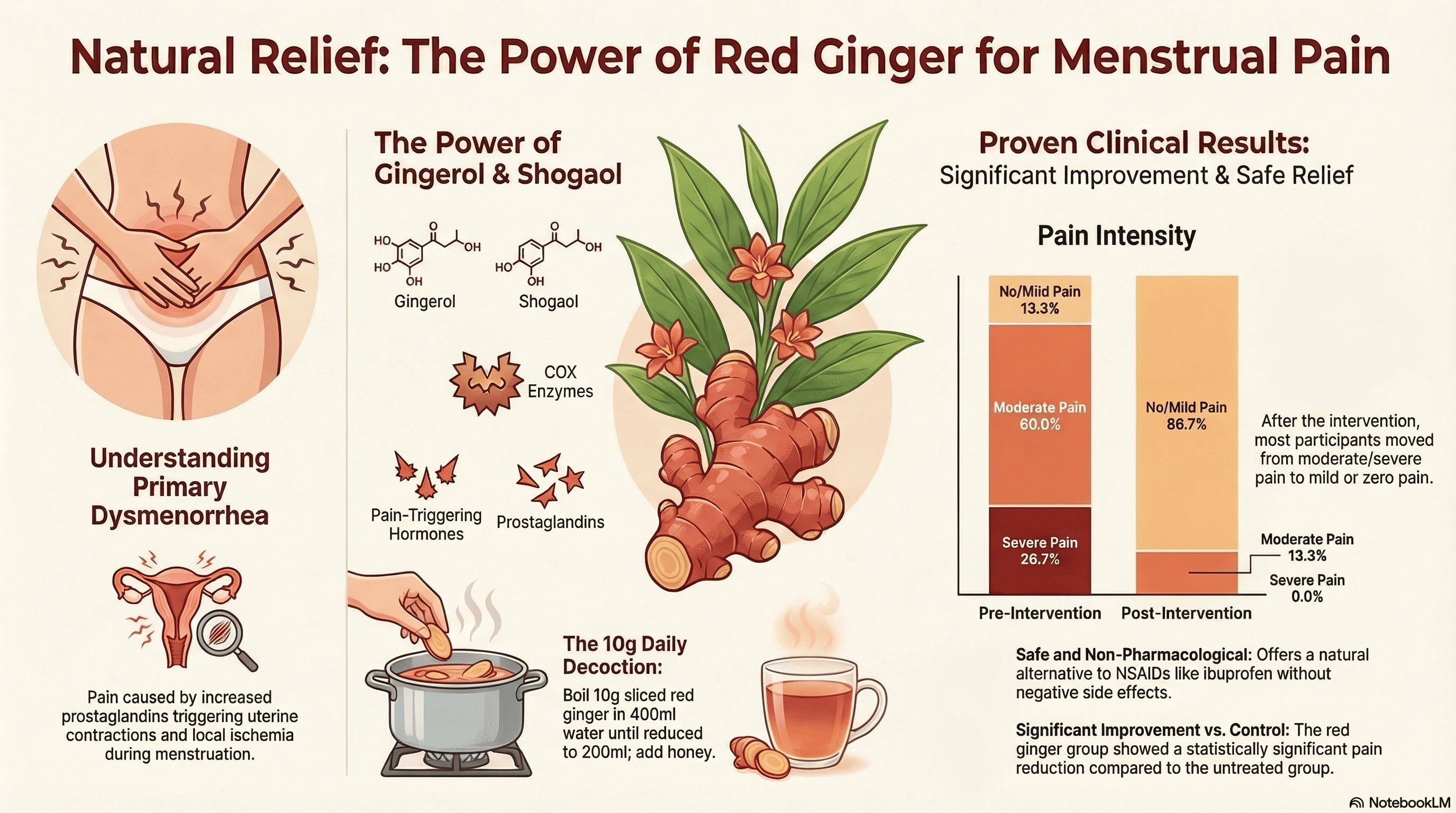
Primary dysmenorrhea is a common gynecological complaint among adolescents, often characterized by lower abdominal pain. Lower abdominal pain typically occurs during or before menstruation and is occasionally accompanied by weakness, nausea, vomiting, and dizziness. Gingerol, shagaol, and zingerol, which are found in red ginger decoction, work to inhibit the prostaglandin hormone that causes pain. The purpose of this study is to find out how much red ginger decoction (Zingiber officinale var. rubrum) can help teenage females at SMPN 1 Pariaman experience less severe primary menstrual pain. This quasi-experimental study with a pretest-posttest control group design included 30 adolescents (15 per group) selected via purposive sampling. The data collection tool was the NRS (Numeric Rating Score) observation sheet. utilizing the Mann-Whitney test to analyze data. According to univariate analysis, the intervention group's pain decreased from moderate (60%) to mild (66.7%), while the control group's pain did not reduce. The intervention group exhibited a reduction in mean pain scores, with a post-intervention mean rank of 9.33 compared to the control group's mean rank of 21.67 (p < 0.05). The results showed a statistically significant difference between menstrual pain intensity in the intervention and control groups. This means that administering red ginger decoction significantly reduced menstrual pain intensity compared to the untreated group. The findings indicate that red ginger decoction may be an effective non-pharmacological option for managing primary dysmenorrhea in adolescents
Downloads
References
Sherwood L. Human physiology: From cells to systems. 8th ed. Boston: Cengage Learning; 2013.
Jannah R. Utilization of herbal plants as an alternative traditional medicine. Jakarta: Penerbit Sejahtera; 2023.
Mariza A, Sunarsih, Yuliasari D, A. Counseling on the use of red ginger as non-pharmacological therapy to relieve menstrual pain in adolescent girls at SMA Muhammadiyah 2 Bandar Lampung. J Kreativitas Pengabdian Kepada Masyarakat. 2021;4(6).
Maulida M, Mahruri S, Ayuni R. The effect of red ginger administration on reducing dysmenorrhea pain in adolescents. J Asuhan Ibu dan Anak. 2023;8(2):73–80.
Juniar D. Epidemiology of dysmenorrhea among female adolescents in Central Jakarta. Makara J Health Res. 2015;19(1). doi:10.7454/msk.v19i1.4596
Karomah PI, Yuliani DA. Effectiveness of red ginger water on reducing dysmenorrhea intensity in adolescent girls. J Ilm Kesehatan Sandi Husada. 2022;11:360–366.
Febriyani R. The effect of green coconut water and honey administration on the level of dysmenorrhea in adolescent girls [Undergraduate thesis]. Semarang: Universitas Sultan Agung; 2022.
Intiyaswati. The effect of red ginger administration on reducing menstrual pain in adolescent girls [Unpublished manuscript]; 2022.
Winarti C, Hernani. Active compounds in ginger and their utilization in the health field. In: Status Teknologi Hasil Penelitian Jahe. Surabaya: Trubus Agrisarana; 2008.
Pujiana DP, Andayu B. Application of consuming red ginger decoction to reduce menstrual pain. Khidmah. 2021;3(1):243–247. doi:10.52523/khidmah.v3i1.329
Oktarina M, Absari N, Eliagita C, Nurobikha N, Agtivani GI. The effect of administration of ginger decil water on reducing levels of dysmenorrhea pain in adolescent women at SMAN 03 Bengkulu City. Indones J Health Res Dev. 2023;1(1):8–13. doi:10.58723/ijhrd.v1i1.34
Cunningham FG, Leveno KJ, Bloom SL, Hauth JC, Rouse DJ, Spong CY. Williams obstetrics. 23rd ed. New York: McGraw-Hill Medical; 2010.
Prawirohardjo S, editor. National Reference Book for Maternal and Neonatal Health Services. 5th ed. Jakarta: PT Bina Pustaka Sarwono Prawirohardjo; 2018.
Aspiani RY. Textbook of Nursing Care for Clients. Jakarta; 2014.
Itani R, Soubra L, Karout S, Rahme D, Karout L, Khojah HMJ. Primary dysmenorrhea: Pathophysiology, diagnosis, and treatment updates. Korean J Fam Med. 2022;43(2):101–108. doi:10.4082/kjfm.21.0103
Kusumawati DA. The relationship between physical activity and dysmenorrhea level in adolescent girls. J Kesehatan Reproduksi. 2019;10(1):45–52.
Putri AP, Handayani D. The relationship between nutritional status and the incidence of dysmenorrhea in adolescent girls. J Gizi dan Kesehatan. 2021;13(2):112–119.
French L. Dysmenorrhea. Am Fam Physician. 2005;71(2):285–291.
Harlow SD, Campbell OMR. Epidemiology of menstrual disorders in developing countries: A systematic review. BJOG. 2008;111(1):6–16. doi:10.1111/j.1471-0528.2004.00012.x
Novitasari D, Fitriyani E. The relationship between caffeine consumption and intensity of primary dysmenorrhea in adolescents. J Kebidanan Malahayati. 2020;6(1):24–30.
Betty B, Ayamah A. The effect of red ginger decoction on reducing dysmenorrhea in 8th-semester students at STIKes Widya Dharma Husada Tangerang. Edu Dharma J. 2021;5(2):61. doi:10.52031/edj.v5i2.177
Rini PSRP, Agustina D, Pramesti T. The effectiveness of red ginger (Zingiber officinale var. rubrum rhizoma) and roselle tea (Hibiscus sabdariffa) on severe dysmenorrhea. Citra Delima Sci J Citra Internasional Inst. 2025;8(2):93–98.
Harmawati H, Ningsih AG, Yulia D. The effect of warm compresses of red ginger (Zingiber officinale Rosc. var. rubrum) on the degree of menstrual pain (dysmenorrhea) in female adolescents at SMP Negeri 12 Sungai Penuh in 2018. J Kesehatan Saintika Meditory. 2018;1(1):25–34.
Chrisna T, Aprilya S. The effect of red ginger decoction on reducing dysmenorrhea in adolescent girls in Blimbing District, Malang City. J Bomed Sci. 2023;11(1):7–13.
Oktarina M, Absari N, Eliagita C, Nurobikha N, Agtivani GI. The effect of administration of ginger decil water on reducing levels of dysmenorrhea pain in adolescent women at SMAN 03 Bengkulu City. Indones J Health Res Dev. 2023;1(1):8–13. doi:10.58723/ijhrd.v1i1.34
Potter PA, Perry AG. Nursing fundamentals textbook: Concepts and practice. 4th ed. Jakarta: EGC; 2005
Published
How to Cite
Issue
Section
Copyright (c) 2026 Prasetyaningsih Prasetyaningsih, Miftakhul Zanah

This work is licensed under a Creative Commons Attribution-NonCommercial-ShareAlike 4.0 International License.